Pages

Monday, March 5, 2012

Meat Quality is Sustainability, Not Snobbery!

© MythicMeats.com
In the face of global hunger and malnutrition issues facing millions, it seems utterly elitist to concern oneself with meat quality - let alone "holistic" meat quality. Indeed - the exact opposite is true.

A rigorously holistic approach to understanding the qualities of meat has profound impacts on our understanding of this most central of foodstuffs. Real holism requires more than just multiplicity in thinking (though the 12 dimensions of meat quality are certainly foundational to the theory). Holism, here, also refers to examining the interconnections between quality dimensions, and exploring all such interconnected attributes across multiple scales (from the cow to the globe).

At first glance, the approach is nothing new. Proponents of  veganism, alternative agriculture, and conventional agriculture, all frequently discuss the issues in such terms. It is precisely because of this widespread, informal adoption of holistic arguments - that an ethical imperative emerges to better understand the framework.

How we measure and talk about meat quality has 
profound impact on  how we produce meat  
© MythicMeats.com
It simply can not be true, simultaneously, that veganism, alternative agriculture, and conventional agriculture each, respectively, represent the single best and most ethical option - as the more extreme advocates from all three camps frequently decry.

An evolutionary perspective can help us understand that, rather than searching for global panaceas, it is perhaps in our better interest to understand the diversity in ethical positions held globally, and identify the range of holistic meat (and non-meat) qualities that science best indicates are in alignment with a range of commonly held values.

When I reference a vision for building greater consensus on the ethics of meat and grazing - I am far from implying that more and more people should move toward any particular ideology. Instead it is that we can do vastly better at understanding and appreciating the diversity that exists. Building a common ground in this manner, appears so critical if we are to develop the levels of cooperation we need to address the coming exponential challenges for food production of all kinds.
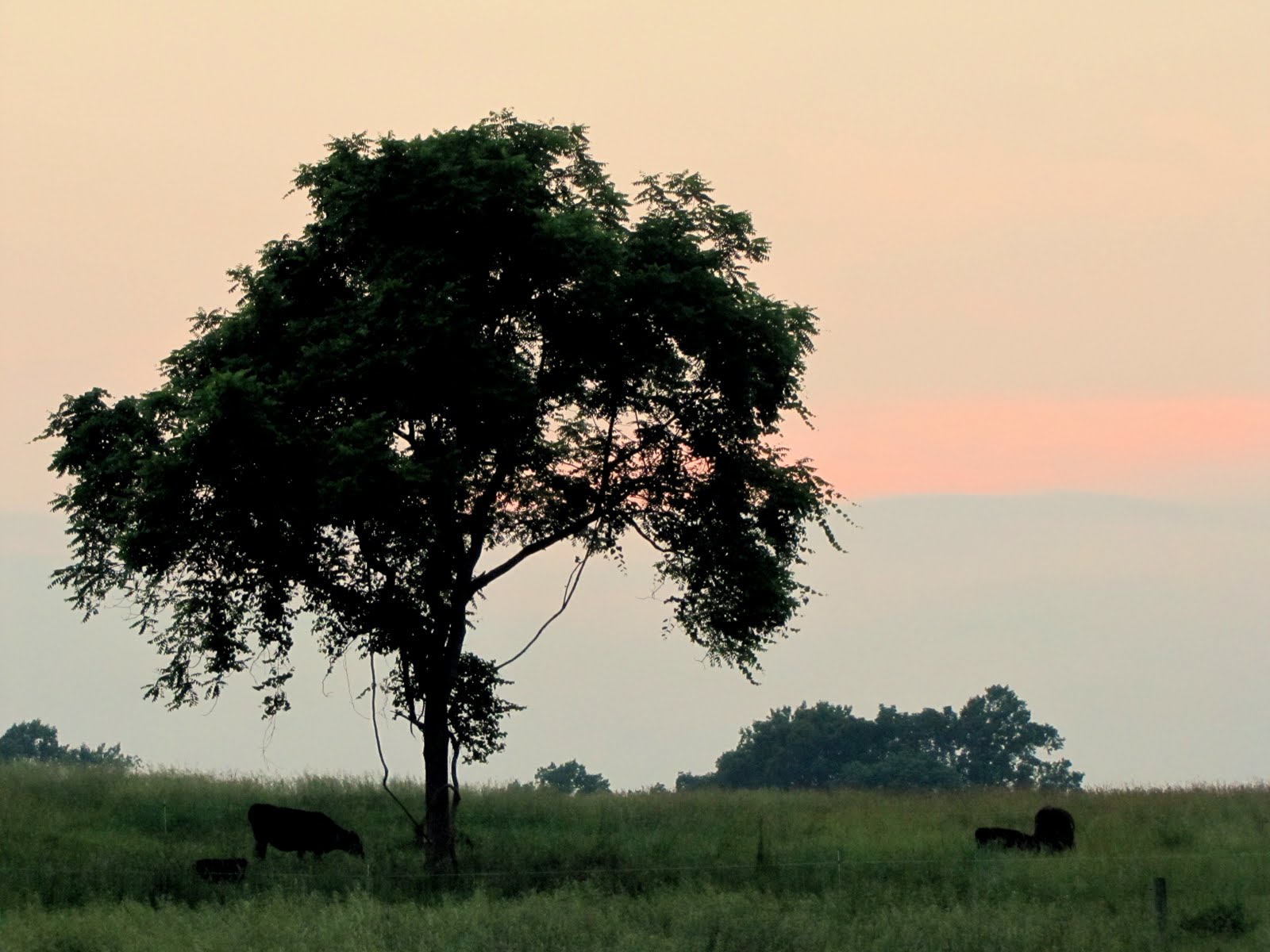
© MythicMeats.com
I am the first to recognize that this is easier said than done - but we can still move forward. The food media has to end the false dichotomy of "good meat / bad meat" and instead focus on developing more rigorously science-based discourse on the diversity of holistic meat qualities we find around the world.

There is no such thing as "perfect meat" (or non-meat) - we will always be dealing with trade-offs among the quality dimensions (e.g. price vs. taste). Where such holistic qualities are so intrinsicly interconnected, it is the optimisation of all such quality dimensions, for all humans  that clearly becomes the only path to a sustainable, ethical future.


Friday, January 27, 2012

A Hidden Gem from the Origins of Consciousness


Reprinted from an Article I wrote for Evolution: This View Of Life

I was farming livestock for 8 years before my passion to probe the depths of evolutionary waters took me from a small beef operation in rural Pennsylvania, to a fascinating institute of Sustainable Agriculture - the University of Kassel in Witzenhausen, Germany. But how did I get here? Why did I drop everything to study applied evolution rather than a straight forward program in beef production?

Like so many of us in this cosmological  field - books are the primary, and most simple answer. I believe everyone has a sort of “tipping point” book - that jaw-dropping literature that burned the beauty of evolution into your mind. For many of course - this book would be Origin of the Species - I’m terribly embarrassed to admit - I have never actually read Darwin cover to cover (it’s on my list), and what I had read - was perhaps at too young a stage in my education to see the broader synthesis. A sad commentary on our educational system, indeed.

For me, the tipping point came  2 years ago - back at the grass-fed cattle farm, in the form of a dusty old book on my bosses shelf. It had been a long day of grazing, and as I was watching our herd of 100 thunder through the thickest of June grasses and on into the sun, I distinctly remember asking; “What was it like?” - what was it really like for evolving humanity to experience the ancient grazing of cattle and their bovid relatives. When I finished chores, I rushed back to the office and pulled out a book I’d earlier noticed, with a title of: The Origins of Consciousness and the Breakdown of the Bicameral Mind - by one Julian Jaynes.

It was a classic book from the 1970’s, about to fall apart, heavily noted in the margins by my boss while he was studying medicine at the University of Pennsylvania. I dove in head first, I think I stayed up till 2am that night, and I finished it within days despite my heavy grazing duties. The eloquence and complexity of what Jayne’s argues was so convincing, and such a synthesis of everything I’d already understood - both specifically about human evolution, and within the more meta-level of emergent complexity - that I imagine my response was nothing less than the thrill that Darwin and his countless intellectual descendants describe when they truly “get it” (or at least - when we  think they get it!).

It was my pleasure to interview the founder of the Julian Jaynes Society, and editor of now two collections of Jayne’s work on Bicameral Mind Theory, Marcel Kuijsten.

Enjoy our interview, and explore the work of Julian Jaynes further. Through his original press, as well as the unpublished works, and highly reflective commentary by Kuijsten and peers.
all through the link below:

http://www.JulianJaynes.org

Friday, January 6, 2012

Sperm, Nipples, & Guts: Top 10 Stories from the Evolution of Beef (pt. 1 of 3)

Since I had the idea to shift this blog into a purely evolutionary perspective, I have been awash in a tidal wave of research and perspectives on the matter.....Where could I possibly start?
How about with the absolute Top Ten stories from my personal Beef files! 
These are the stories that got me hooked on thinking this way about meat and agriculture, and the stories that I hope will show you another universe within the world of the bovids.
The following short stories are in rough chronological order, not based on preference. They are a preview of whats to come, intended to offer a more comprehensive big-picture, a road map, before we dive deeper into these, and other stories from the real-world mythology of meats.
There are many questions and unkowns in the field of evolution, and while any of the details contained herein could shift or change with new evidence - one truth will remain absolutely eternal - that of the unbroken chain....


From story #1 about our spermoid-forefathers, to story #10 about our own very own personal experience of evolutionary Amazement; there is a direct and unbroken chain of cooperation and compassion, triumph and success.


1. Sperm
Sperm Cells 
from Wikipedia
Neocallimastix Fungi from a Bovid Gut 
by Daniel Wubah
Did you know the old "What came first- the Chicken or the Egg?" bit, is not actually a parable, but an entirely answerable question? The answer, of course, is Sperm! Mycologist, Paul Stamets is famous for describing humans as having descended from Fungi. Pointing to the relatively recent discovery of the Opistokonta Super-Kingdom. This new trunk on our global family tree links the kingdoms of Animal and Fungi as far more connected to each other than to any of the other known taxonomic kingdoms. More simply put, after the first emergence of life, bacteria appeared, than later plants developed off of this line. Eventually these "opistokonts" split-off from plants into a genetic line that would eventually come to form every living animal and fungi existent today - including you, me, and that swiss-mushroom cheeseburger I ate for dinner last night. So if we (and cattle as well) are related to Fungi- what was our Last Common Ancestor like? What features did we share in common with these original opistokonts? Odd as it may seem - the two things that can actually best help us understand this are Sperm cells & Cow Stomachs.... 


2. Nipples
Angus Cow Nursing her Calf - After 350 M years of Evolutionary Development
Photo ©MythicMeats.com
The first baby-bottle nipples were fashioned from the teat of a dairy cow. Milk itself seems to be a universal symbol for kindness & generosity - yet from where did these flowing udders emerge? For this shocking tale we have to travel back some 350 million years ago! Back to the time of the Synapsids, some of the very first land-roaming reptilian-like monsters to escape the darkness of the sea. No - these ancient lizzardesque synapsids did not sport the credentials to enter the biological dairy business. Rather, they offered their youth something much more fascinating at the time.....stinky butt sweat. While the bio-chemical and functional reasons are argued, scientists generally concur that the mammary glands and nipple structures in modern mammals (cows and humans alike!) developed over the eons through infantile preference for the exudates (sweat) from one or more sub-dermal glands in our most reptilian of grandparents (butt and stomach sweat). That is to say - there is a direct and unbroken chain between the calves and babies that suckle the teats of today, and the dietary choices of our deepest of reptilianoid ancestors. And then there's whole this part about the kangaroo baby......


3. Guts
The Chevrotain - a Primitive Ruminant
Photo: Wikipedia
Here's a chevrotain - a tiny "mouse deer", and member of the Tragulid family. While the chevrotain is a modern creature, she is as close as we might get to the most primitive last common ancestor of cows, sheep, goats, bison, and all their wild ruminant relatives. Yet the very first ruminants did not ruminate - that is - the most ancient of cattle ancestors were not yet able to digest grasses and chew a cud as their modern descendants do so gracefully.


How and what a cow decides to eat, has been shown be an incredibly complex decision. These daily decisions are made on a complex of biochemical and cultural feedback mechanisms (yes - animals have culture too). Yet, while you could say the same of humans, we seem to not be very good at picking our own diets anymore (at least many of us). Simply put - cattle and humans pick their foods through very different mechanisms. Humans now have fully cognitive, and ever more so, fully socio-political and economic systems for regulating and selecting our diets. So how did this happen? How exactly did we diverge from our last common ancestor with cattle- the mole-like boreoeutherians of some 100 mya? The "guts", or digestive systems of both cattle and humans form pivotal functions in the interwoven narrative of contemporary evolution - join me in future posts to see these complexities unfurled!


Saturday, October 29, 2011

Meats of Wisdom - A Big History of Carnivory

The origins of human consciousness have fascinated me since since I was a young child – and in spite of my intense focus on the cosmic marriage between humans and meat – it is only just recently that I've been able to develop a more cohesive understanding of the role that meat eating has had in the epic of human evolution.

It's actually quite an unbelievable story – this one about the ape that took a liking to meat – it's a story that stretches backward to the big bang – and forward into the deep, unforeseeable future. Rife with speculation – yet contextualized by a mind-boggling mass of raw archeological data; we are able today, to infer and discuss more about the story of man's conscious awakening than ever before. And yet, so many fascinating questions remain – questions that can illuminate and deepen our appreciation of the very meats we now consume.

Over the months to follow, I'll share with you a selection of evolutionary episodes – mind-blowing nuggets from humanities deep past that tell the story of man, meat, and what it meant for the very fabric of reality on timescales bewildering to even the most earnest students of ancient human history.


Thursday, May 19, 2011

I'll have a Hamburger with a Side of Skepticism....

Photo Credit: MycoBovine.com
The nature of science is rooted in skepticism. We often get frustrated that 'science is always changing it's mind' - and yet this constant reflection, rejection, and adoption of theories is the very evolutionary process that allows us to advance as a society.

Meat is constantly the subject of intense scientific and emotional debate. If you browse through my previous blog posts here, it is clear that I have a 'bias' towards what we might call 'sustainable meats'. I put bias in quotes - because sustainability as a social goal can hardly be called such. Yet I am biased - but it's not in my dedication towards improving the sustainability of our meat supply - it's in my assumptions of how we get there....and indeed I am far from the only one guilty of this crime against scientific reasoning.

Where I work in Chester County Pennsylvania, we produce Grass-Fed Beef - feeding no grains, no added hormones, etc., etc. - you've heard the rap - we produce 'good beef' from 'happy cows' in a way that is 'better for the environment' - something very few in the US would second guess. Ironically though - the ones who do second guess this narrative are among the most credentialed in the meat sciences.

Recently, the American Meat Institute launched a new website and social media campaign - MeatMythCrushers.com (not to be confused with our own  MythicMeats.com.....but I'll get to that in a minute) Myth Crushers has the noble intention of bringing science to the consumer to de-bunk the "myths" that are plaguing the modern protein industry. Check out their website, but some of what they call "myths" are directly in opposition to everything I hold dear- for example they claim that:

  • Added growth hormones in beef are not a concern for human health
  • Antibiotic use in livestock is not a concern for human health
  • Grass-fed beef is neither safer nor healthier than grain-fed beef
  • Feeding cattle corn is completely "natural"
To their credit - they do clear up two long-held truths that I fully endorse:
  • Nitrites in cured meats are not a health concern
  • Pork and Poultry do not receive any added growth hormones - ever
The project is all about bringing science into the discussion - and clearing up the muddled minds of consumers awash in a sea of biased anti-meat media coverage. It is a noble cause for sure, and I applaud the effort - yet I am most certainly not ready to say that their claims are completely correct.

In my beef files, I have tons of peer-reviewed journal articles that potentially 'de-bunk' much of the more shocking claims they make - but it's not as simple as "my science vs. yours" - these are often incredibly complex questions and this is the point. 
Photo Credit: MycoBovine.com

The approach that the industry and Myth Crushers has taken runs under a paradigm of maximum efficiency. Too often in the 'sustainable food' media - this efficiency is unfairly portrayed as simply soul-less corporate greed....and while I'm not prepared to say that Cargill or Tyson do have souls - what Myth Crushers does convey is the industry commitment to sustainability - as measured by very selective indicators of efficiency. And therein lies the problem (...I think ;) 

Over the next months I've made it my academic job to throughly review the science behind the more important of the Myth Crushers claims. Some may pan out as the meat scientists claim (I really hate to say it, but added growth hormones in beef isn't looking like it should be a health concern for consumers). But whether I prove them wrong, or have my mind radically changed - is almost beside the point.

Photo Credit: MycoBovine.com
There is big difference between Meat Myth Crushers and Mythic Meats - and it can be found in the common language. Certainly a "myth" can be an untrue story that is commonly believed - but Mythic Meats uses the term more in the Joseph Campbell sense - the idea of guiding stories that shape our values and understandings of the world. In this context, as we struggle to understand the mythic goal of sustainability as it relates to meat production - we perhaps need to step back and ask bigger questions as a society about what we want from our meats. Is beef just a free-market commodity, or does it have a web of complex threads connecting multiple aspects of our rural and urban communities that can only be understood from a more holistic perspective? 

I'll come back to the science behind Myth Crushers in the months to come - but in the mean time - let's all try to approach science and sustainability with the humble, apolitical respect that it's complexity demands.

(One practical way to do this is to "Like" both MythicMeats.com and MeatMythCrushers on Facebook ;)


Friday, April 1, 2011

Black Market Butchery

A Deliciously Illegal Grilled Leg of Goat (Photo Credit: MycoBovine.com)

(legal disclaimer: the following entry in no way represents an admission of guilt to any crimes insinuated or directly discussed herein, the names and locations have been changed to protect the innocent) 


It's hard to believe I just committed an international crime! And for this particular transgression, I am indeed, a repeat offender. The illegal processing and sale of high quality meats!

(Photo Credit: MycoBovine.com)
I awoke with the sun....or maybe a little later... and walked up the hillside onto my dear friends newly purchased land to prepare for what was to be be an inaugural feasting for the ages. Adjacent to her garden plot homestead lies a small goat farm run by a very fine older German farmer, lets call him Fritz ;) My friend had arranged for Fritz to slaughter a young buck from the herd the night before. We arrived to find an impeccably cleaned carcass hanging in Fritz's neighboring summer camp house. As I began to literally butcher this young goat (my meat cutting skills are still....uh...in the works) I was struck with the strong irony of a discussion I'd begun with my insightful colleague, Hannah Semler, the night before regarding our old stomping grounds across the Atlantic, on the coast of Maine.

Maine Gives a Green Light to Black Market Meats
My rough cut goat half....
Breaking the law in Germany....or am I?
(Photo Credit: MycoBovine.com)
Sedgwick, Maine, located in the second northern most county on the east coast of the United States, is surrounded by an amazing community of progressive farmers and consumers. Indeed, my very first cow, Mabel, came from this town - so I was somewhat thrilled to learn that they just passed potentially landmark local legislation to support innovation in their local agriculture sector. Yet I say only "somewhat thrilled" because experience has shown me a dark side to the kind of policy this dreamy coastal village has put through.

The language of this new town ordinance is available here - but the basics are that it exempts  those local producers who sell their food on-farm, from any state or federal food safety regulations. When Hannah first brought this to my attention - I immediately drudged up memories from the worst dairy I ever worked for. A passionate elderly woman milking seven goats and one cow on 30 acres of land - and transforming that milk into a bounty of cheese, butter, and yogurt for sale to the local community (just to clarify this farm is NOT located in Maine). In theory, this is the exact profile of the type of farm this policy is intended to support - and yet despite my advocacy for small farms, I had to leave this operation after a mere 3-weeks because of horrendous hygiene conditions, and this farmer's unwillingness to adopt sound practices. She was producing the most filthy raw milk I have ever seen (and I do believe in drinking raw milk), but she believed she was immune from food pathogen contamination. Her attitude was echoed, almost verbatim, by Bob St. Peter, the politically active Mainer who helped get this regulation passed, in his quote that "it’s the industrial food that is causing food borne illness, not us [small farmers]". 


An Illegal Goat Heart (Photo Credit: MycoBovine.com)
It is true, it is the large scale national-scope food recalls for products such as beef, spinach, and peanut butter that have all but destroyed public faith in the US food system. And it is equally true that some small farmers employ practices that research has shown can reduce potential food safety risks, such as grass-feeding of cows to reduce e. coli populations. But it is dangerous to make blanket statements about food safety and the scale of agriculture, and it might be even more dangerous to abandon all regulation of these producers based on this potentially false narrative.


Going back to the example of this dirty dairy I worked for - we might ask - was food safety policy really keeping her down, or actually helping her out. First - it is important to note that despite her micro-scale of production and aforementioned disgusting lack of sanitation - her small farm was still a Grade A dairy and cheese plant, among the smallest in the world and located in a highly regulated agricultural state. As an employee with a basic knowledge of food science - I was very much relieved to have a state inspector come for her quarterly cheese room inspection. Far from working to shut her down, this government employee made a few (fewer than I would have liked) suggestions to improve basic cleanliness. "Don't let this mold grow on these walls", "make sure your recording your temperatures properly", etc. Basic, basic stuff that any customer would want to have enforced. Yet despite her "on-farm store" - few customers ever got a close enough look in the creamery to realize they should never be drinking this milk (I never did the entire time I was there...and I'm willing to take pretty large personal risks with food safety).


Towards Smarter Food Safety Policies


Don't get me wrong, I emphatically applaud the Sedgwick community for a very creative power grab for their own food democracy. The US Federal government has far out stepped their bounds and States and Municipalities should have every right to self regulate their own food supply. But self-regulation and no regulation are two very different things. 


Hanging goat halves in a summer chateau
above a rural German village
(Photo Credit: 
MycoBovine.com)
Back in Germany, at our little goat party, I grappled with these issues... I definitely do not want to break the law, internationally or nationally, and yet, I fear what types of production and processing might occur in a completely deregulated food economy (no matter how local and community-based it may be). I was quite happy with both the slaughtering and butchering work our team accomplished, but from a professional perspective, there were undoubtedly many food safety 'violations'. Clearly we are all fine and safe, but I wonder if food safety was even considered by any of the others feasting by the fire that day (it's not really the kind of thing you bring up when folks are eating), or if they, like many, assumed it's small-scale and therefore safe?


Much of food safety policy is based on a premise of 'the informed customer' - that is if a customer buys directly from a farm, there are (generally) far less regulations than if they buy a product in a store in a state across the country. Yet, even when customers can 'see' and walk around a farm, they rarely actually 'see' everything, and even those that do have access to processing rooms rarely have the trained eye or food safety background to identify many of the potential problems.  


At the same time, we do have inalienable rights to eat the food we choose, from the producers we choose. The answer most certainly is not total anarchy for local foods, but rather thoughtful, unobtrusive, and effective policies that support producers in the kind of life-long learning and vigilance it takes to produce safe meats and cheeses. 

(Reprinted from SocialGrazing.com)

Monday, March 14, 2011

Electric Blue Universe - The Secret Life of Sausage

Magnified Penicillium Sp. isolated from a 

Nord-Hessen Ahle Wurscht Sausage
Photo Credit: MycoBovine.com
I just returned from the meat laboratory this evening and my mind has been swirling with the electric blue images we captured there - shedding light on the most mysterious secret life of the fermented sausage.

Cultured Penicillium Sp. isolated from a 

Nord-Hessen Ahle Wurscht Sausage

Photo Credit: MycoBovine.com

Some readers here may recognize that authentic blue cheese is cultured with a special cheese mold, or fungi - of the species Penicillium roqforti - yet many may not realize the best sausages available are those fermented by a close cousin of this little blue stinker - Penicillium nalgiovense. 
Sporulating hyphae of Penicillium sp.
Photo Credit: 
MycoBovine.com

Many of us don't want to think about eating a mold, but it is important to remember that these fungi produce both an array of outstanding flavor molecules, as well as acting to balance the delicate microbial 'eco-system' of the sausage rind -  impacting taste, aroma, and even food safety.

I recently had the opportunity to culture and isolate a strain of fungi from a rare fermented sausage - the Nord-Hessicher Ahle-Wurscht - soon to be Germany's first regionally protected sausage. Will we find a commercially available strain such at p. nalgiovense, or, given this producers traditional methods, might we find some strange new variant or species?

Photo Credit: MycoBovine.com
 The genus of Penicillium  gets it's name from the latin for "painbrush"... no doubt for the paintbrush like shape it inhabits during certain stages of it it's life. Yet this fungi is also clearly a paintbrush in the highest artistic sense. These meat artisans sculpt their protein rich canvas's and paint upon them flavors and aromas with the help of these simple microbial tools.


Photo Credit: MycoBovine.com